Wednesday, June 11, 2025

Prophecy


Prophecy definition

A prophecy is a prediction of something that will happen in the future. God is the Author of prophecy in the Bible.

As He explained through the prophet Isaiah, “I am God, and there is no other; I am God, and there is none like Me, declaring the end from the beginning, and from ancient times things that are not yet done, saying, ‘My counsel shall stand, and I will do all My pleasure’” (Isaiah 46:9-10).

Prophet definition

Biblical prophets were individuals chosen by God to reveal the messages He gave them.

As The International Standard Bible Encyclopedia notes: “According to the uniform teaching of the Bible the prophet is a speaker of or for God. His words are not the production of his own spirit, but come from a higher source. For he is at the same time, also, a seer, who sees things that do not lie in the domain of natural sight, or who hears things which human ears do not ordinarily receive” (“Prophecy, Prophets”).

Biblical support for this explanation is clearly seen when God appeared to Aaron and Miriam and said, “Hear now My words: If there is a prophet among you, I, the LORD, make Myself known to him in a vision; I speak to him in a dream” (Numbers 12:6).

Many of the prophecies recorded in the Bible have already come to pass. Many more remain to be fulfilled at the end of this present age, before Christ’s return to earth and after. As we study this important part of Scripture, we need to keep in mind several important principles:

  • Faithful prophets of the Bible wrote as they were inspired to do so by God. In other words, no prophecy in the Bible came from any individual writer’s personal ideas, but rather by God’s direct inspiration.
  • Fulfilled prophecy gives us confidence that God is real and that He will fulfill what He has said about the future. Since prophecies of world-ruling empires and even the name of a specific ruler long before his birth have all come to pass, we know the rest of the Bible’s prophecies will likewise come to pass.
  • Prophecy motivates us to have a proper fear of God, which includes faith in God and obedience to His laws. Since so many judgments are coming upon peoples and nations because of disobedience to God’s law, we realize that commandment-keeping is an important part of our relationship with our Creator (Matthew 19:17; Revelation 22:14).

Learn more about the significance of Bible prophecy by reading the following sections:

Prophets and false prophets in the Bible

Throughout the Bible a number of people are recorded as serving as prophets of God. Beginning with Abraham (Genesis 20:7), both men and women—called prophetesses (Exodus 15:20; Judges 4:4)—have faithfully served as God’s messengers.

Of course, not everyone who claims to be a prophet or prophetess is necessarily a true spokesperson for God. The Bible reveals that there have been false prophets in the past and that there will be false prophets in the future.
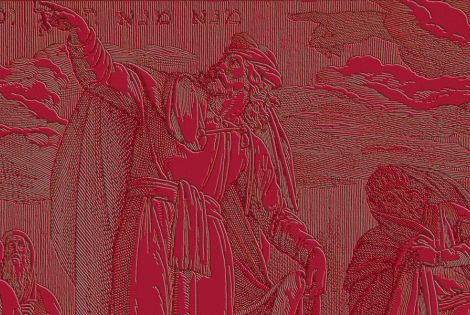
For example, during the time of Nehemiah, a false prophetess by the name of Noadiah tried to discourage the work God was doing through Nehemiah (Nehemiah 6:14).\

Additionally, the book of Revelation corrects members of the Church for allowing “that woman Jezebel, who calls herself a prophetess, to teach and seduce My servants to commit sexual immorality and eat things sacrificed to idols” (Revelation 2:20).

In His famous Sermon on the Mount Jesus said, “Beware of false prophets, who come to you in sheep’s clothing, but inwardly they are ravenous wolves” (Matthew 7:15). Later, in His Olivet Discourse (Prophecy), He added that “many false prophets will rise up and deceive many” (Matthew 24:11).

In the book of Revelation, Jesus also speaks of “the false prophet”—a particularly deceptive person who will arise in the end times (Revelation 16:13; 19:20; 20:10).

For help in determining whether someone is a true prophet of God, consider applying the four biblical tests outlined in the article “False Prophets.”

We also have articles on a number of prophets, such as Moses, Samuel, David, Elijah, Isaiah, Jeremiah, Ezekiel and others.

12 tribes of Israel in Bible prophecy

Many people today think of the 12 tribes of Israel as simply a historical curiosity without any continuing relevance. But there are some amazing future prophecies regarding these peoples.

Jesus promised His disciples that in His coming Kingdom they would “sit on twelve thrones, judging the twelve tribes of Israel” (Matthew 19:28). The city of New Jerusalem will also have 12 gates bearing “the names of the twelve tribes of the children of Israel” (Revelation 21:12).

Why does the Bible continue to mention these people long after their two nations of Israel and Judah came to an end? Where are these people today? How do they figure in end-time prophecy? The articles in this section answer these questions and many more.

The Middle East in Bible prophecy

Of all the places on earth, the Middle East is the premier location for biblical history and prophecy. It’s where God created the first humans. It’s where civilizations began. It’s the land of the prophets and the ancient nation of Israel.

Looking to the future, Jerusalem is going to be the city from which Jesus Christ will rule when He returns and establishes the Kingdom of God on earth. As God told David and Solomon, Jerusalem is the place He has chosen out of all the tribes of Israel and the place He will put His name forever (2 Kings 21:7).

The Middle East has also been one of the most fought-over pieces of real estate on earth, and sadly, this legacy is prophesied to continue in this present age.

The articles in this section of our website will help you discover what the Bible predicts will happen in this volatile part of the world as we enter the end times prior to and at Christ’s return.

Understanding the prophecies of the book of Daniel

The book of Daniel focuses on world-ruling empires or blocs of nations that would arise and exist from Daniel’s time until Christ’s return.

This book has so many detailed prophecies regarding the major world powers that some have questioned whether Daniel could have truly written about these events prior to their occurrence.

Contrary to theories of the skeptics, who question the date of Daniel’s writing, the contents of this book—which were revealed to Daniel by God—prove that God does indeed control world events and that He can announce them in advance.
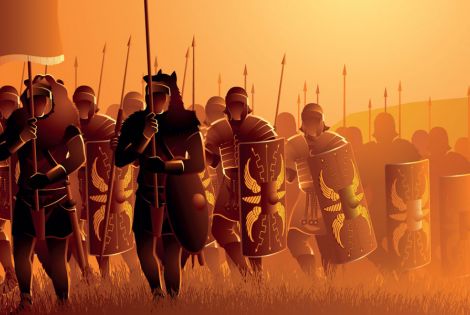
To learn more about this remarkable book and the prophecies it foretells, see the accompanying articles in this section of our website.

Understanding the book of Revelation

Many people find the last book of the Bible—the book of Revelation—one of the most difficult to understand. This is ironic since its beginning words state that it is “the Revelation of Jesus Christ, which God gave Him to show His servants—things which must shortly take place” (Revelation 1:1, emphasis added).

So, instead of being a mystery, the book was designed to reveal what will occur.

Even so, people wonder about the meanings of the seven churches of Revelation, the seven seals, the seven trumpets, the seven bowls of wrath, the 144,000, two beasts and the mark of the beast, a false prophet, Babylon the Great, and New Jerusalem. The articles in this section of our website address these important topics and more.

Prophecies of the Kingdom of God

The Kingdom of God was a central component of Jesus’ ministry (Mark 1:14). He often spoke on what this Kingdom is like and what one must do to enter it.

A good number of Jesus’ parables begin with the phrase “the kingdom of heaven is like” (Matthew 13:31, 33, 44, 45, 47, 52). For a detailed study of these Kingdom parables, see the article “The Kingdom of God Is Like.”

When, where and how this Kingdom will be established has puzzled many. Some have suggested the Kingdom is within us. Others have said it is the Church. But do these explanations fit what the Scriptures teach?

For the biblical explanation and instruction on how we can seek this Kingdom now, see the articles in this section of the website. 

What you need to know about the end times

Biblical prophecy indicates that today’s world is going to become so corrupt that it will be like the days of Noah before the Flood (1 Peter 3:20; compare Genesis 6:5-8).

Conditions will become so bad that it will be necessary for God to intervene to save mankind from extinction.

Speaking of this time, Jesus said, “And unless those days were shortened, no flesh would be saved; but for the elect’s sake those days will be shortened” (Matthew 24:22). Fortunately, God has a plan by which we can be delivered from “this present evil age” (Galatians 1:4).
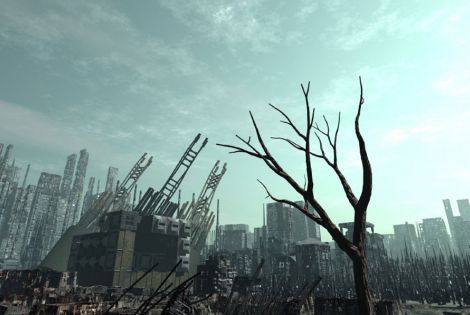
The Bible teaches that just as in Noah’s day, most people in the future will also be unaware of God’s impending intervention (Matthew 24:37).

What are the signs of the end of this age? What is going to happen during this time of trouble? Why will all this evil occur? In light of these prophecies, what does God expect of us?

Answers to these questions are found in the many articles in this section.

America in Bible prophecy

With the world’s largest economy and biggest military budget, the United States of America is widely perceived to be the most powerful country in the world. Since the Bible addresses what will happen to so many countries in the end time before Christ’s return, it makes sense that the U.S. would be included in this group of nations.

Biblical prophecy does address the U.S., but students of the Bible have to know how this nation is identified. In the section on the “12 Tribes of Israel,” evidence is presented that links this nation to the descendants of Joseph and specifically to the tribe of Manasseh, whose people were part of the ancient nation of Israel.

For further explanation of the prophecies that describe America’s existence and prominence, see the article “Blessings of Abraham.” Additional articles in this section explain why God is angry with America and why He will punish its citizens if they do not repent of their sinful conduct.

Bible prophecy in the news

Watching biblical prophecy unfold while staying close to God is something Jesus strongly implores us to do (Luke 21:36). Jesus said that the purpose for our doing so is that we might “stand”—or take our “place before the Son of Man” (Bible in Basic English). And God desires to place us in the role of “kings and priests” when Christ returns, serving under Him during His millennial reign on earth (Revelation 1:6; 5:10).

Watching prophecy helps us to remain focused on God’s plan to establish the Kingdom of God on earth. And it gives us motivation to prepare now so we can help Christ rule over those humans who survive the Great Tribulation and live during His coming millennial reign.

But with so much news these days coming from all over the world, how can we know what to watch? And what is the significance of the events that are transpiring?

The article titled “Prophecy in the News” provides a good overview of current prophetic trends that deserve our attention. It also provides further explanation as to why we need to watch prophecy in the news.

In addition to the articles that address prophetic issues in this section of the website, we offer free blog posts addressing current events and their prophetic significance. Here is a link to subscribe to these free, insightful News & Prophecy blog posts.

Biblical prophecy is a wonderful gift from God. Through fulfilled prophecy, we can have confidence in what the Bible predicts. Through future prophecies, we can know in advance what is going to occur.

Be sure to study this important subject to further your relationship with God!


What Does the Bible Say About the End of Days?


Are we approaching the end of days? If so, will humanity cease to exist then? And what does Scripture tell us about this frightening time?

The end of days is on our minds. Consider our obsession with how the world might come to an end. That obsession becomes quite clear when we look at the subject matter of so many modern movies.

According to a list on the website IMDb (which stands for Internet Movie Database), there are 1,187 “apocalyptic movies.” Of course, the site uses the word apocalyptic loosely. Apocalypse, which comes from the Greek word for revelation, is the Greek name for the final book of the New Testament. That book is filled with terrifying visions that reveal future events.

It is because these revelations are about frightening future events that the word has taken on a different meaning in English. One definition in the online Merriam-Webster Dictionary is “foreboding imminent disaster or final doom.”

Most of the apocalyptic movies on the IMDb list don’t mention the Bible or biblical prophecy. Rather, these movies with end-of-the-world scenarios play on modern fears that range from nuclear war to pandemics, and from zombies to artificial intelligence run amok.

Even so, the IMDb list is significant because it points out our fascination with the end of days. So what does the Bible say about this subject?

Looking for the end of days in Scripture

The New King James Version of the Bible doesn’t use the term end of days, though it does include the phrase end of the days twice in Daniel. A few other English versions do occasionally use the phrase. And the Bible uses a variety of other expressions that point to the same climactic point in history.

The end of days is more than what Hollywood portrays. It is the culmination of God’s plan of salvation for this present age, and it is the time when Christ will return to earth to save humanity from self-destruction. If you so choose, you can be part of that wonderful kingdom.These phrases include “day of the LORD,” “that day,” “latter days,” “last days” (first used in Genesis 49:1) and “end of the age.”

Space does not allow this article to cover the concept throughout the entire Bible. Since the expression most similar to end of days occurs in Daniel, we’ll focus on the end-of-days idea in the book of Daniel.

Daniel’s use of end of the days

As noted above, Daniel mentions end of the days twice. Only one of those is a prophetic reference.

That reference occurs at the very end of the book. In fact, it constitutes the last four words of Daniel: “But you, go your way till the end; for you shall rest, and will arise to your inheritance at the end of the days” (Daniel 12:13).

The specific days referred to here are the 1,335 days mentioned in verse 12. These days include the 3½ years of the Great Tribulation and conclude with the return of Jesus Christ.

Not the end of humanity

These words at the end of Daniel do not describe the destruction of humanity. On the contrary, an angel uttered these words to the prophet Daniel to encourage him after he had been told startling and terrifying details of a coming “time of trouble, such as never was since there was a nation, even to that time” (verse 1).

How to Understand Prophecy Free Booklet

The angel explained that Daniel would “rest” before he would “arise” at the end of the days. In verse 13, “rest” is a euphemism for the period between Daniel’s death and his resurrection—the time that he would be in the grave. The word arise refers to his resurrection from death.

For Daniel, then, the end of the days was not something to fear. Rather, it was to be anticipated as the fulfillment of a wonderful promise!

Here we already see a great disparity with Hollywood’s apocalyptic ideas. Many times moviemakers show the human race nearly destroyed—and without any real hope for the future. If there is any glimmer of hope in these movies, it lies in the efforts of humans rather than the promises of God.

The end of days in other words

To understand the broader meaning of this concept in Daniel, we need to consider where it appears in the rest of the book. Daniel has much to say about the end of days, though the book may not use that exact term. Besides “the end of the days,” Daniel uses these expressions:

  • “The time of the end” (Daniel 8:17; 11:35, 40; 12:4, 9).
  • “The appointed time” (Daniel 8:19; 11:35).
  • “The time” (Daniel 7:22).
  • “That time” (Daniel 12:1, three times).
  • “The end” (Daniel 8:19).
  • “A time of trouble” (Daniel 12:1).
  • “Latter time” (Daniel 8:19, 23).

All of these are in four chapters of the book, and all four of those chapters (7, 8, 11 and 12) are in the second half of Daniel.

The first half of the book gives readers a glimpse into the royal court of Babylon. More importantly, these early chapters deal with the gentile world, its kings, and the future God revealed to King Nebuchadnezzar. That revelation summarizes the rise and fall of major empires, from Babylon to the last human government to exercise dominion over most of humanity.

A time of trouble at the end of days

In contrast to the first half of Daniel, the second half focuses on the fate of Israel as a people and as a nation, particularly in relation to the world-ruling empires prophesied in the first half of the book. Significantly, the visions are not those of gentile kings, but visions Daniel himself received over the course of several years.

It’s important to understand that Daniel was living in exile in Babylon. His nation, the kingdom of Judah, had ceased to exist, and his people, like him, had been taken into captivity. And more than a century before the exile of the kingdom of Judah, the northern tribes, called the kingdom of Israel, had gone into captivity under the empire of Assyria.

Daniel, like the rest of his people, longed for restoration. His visions foretell a time of restoration and reconciliation for the people of God. These same visions, however, tell of difficult—even desperate—times leading up to that restoration.

The angel Michael told Daniel that all the people of Israel, dispersed as they were, would face “a time of trouble, such as never was since there was a nation, even to that time” (Daniel 12:1).

A time of hope at the end of days

Unlike many of the apocalyptic movies Hollywood rolls out, the book of Daniel does not leave the careful reader feeling hopeless and afraid. Sprinkled throughout are encouraging words about the end of days.

Finding Hope in a Hopeless World Booklet

There are three such encouraging remarks in chapter 7, all prophesying that the “saints of the Most High” would be given dominion over the kingdoms of the world (verses 18, 22, 27). Though God’s people would experience terrible troubles leading up to the end of days, God promises ultimate victory!

What is significant about this victory is that it does not come about because of the efforts or ingenuity of humans. It is not a human hero or band of heroic figures who save humanity. It is the Messiah, Jesus Christ Himself, who steps in to save us from utter destruction.

The angel Gabriel explained that this intervention would be brought on by the rise of an evil king at the end of days. That king would “even rise against the Prince of princes” (Daniel 8:25)—arrogantly attempting to fight against Christ!

The verse continues, telling us that this malignant ruler “shall be broken without human means.” It is Christ who will put down this threat to humanity and usher in the Kingdom of God. This is why one of the terms for this future time is “Day of the Lord.”

How you should view the end of days

It is clear that the not-too-distant future will not be an easy time. The warnings throughout Scripture are sobering, but they are not without hope for the “saints of the Most High.”

Michael assured Daniel that “at that time your people shall be delivered, every one who is found written in the book” (Daniel 12:1). This book is the Book of Life. (To learn more about this book, read our online article “The Book of Life.”)

Does this chapter in Daniel give us any clues about how we can be sure we are in the Book of Life? Yes! First, Michael told Daniel that the saints would be “purified, made white, and refined” (verse 10). This verse shows that, although some of the saints will endure some horrific trials, they will be delivered through them (and not necessarily from them).

In the same verse, we read that “the wicked shall do wickedly; and none of the wicked shall understand, but the wise shall understand.” This statement puts a clear choice before us. If we continue to “do wickedly,” we will not understand the prophetic warnings.

If we are wise, however, we will understand. That wisdom comes from obedience to God, as another part of Scripture points out: “The fear of the LORD is the beginning of wisdom; a good understanding have all those who do His commandments” (Psalm 111:10).

The end of days is more than what Hollywood portrays. It is the culmination of God’s plan of salvation for this present age, and it is the time when Christ will return to earth to save humanity from self-destruction. If you so choose, you can be part of that wonderful kingdom.

For more about the end times, read “What You Need to Know About the End Times.” For more about the Kingdom of God, read “The Kingdom of God: The Best News You Could Hear!


“As a Thief in the Night”


The return of Christ will bring great joy! But before that comes a time of sorrow and a warning not to let it catch us off guard “as a thief in the night.”

Do you remember eagerly waiting for the final bell to sound at school before summer break? I vividly remember standing close to the door, waiting with great expectancy, knowing that the bell was going to sound at any moment.

All of my classmates were excited too, because when the bell sounded, it was time to start having some real fun. It was time for rag ball, Little League baseball, swimming and riding my bike for hours on end.

Are you anticipating a future time when the proverbial bell will ring, and the inhabitants of the earth will know that “summer” is here?

At the sound of the seventh trumpet blast, Jesus Christ is going to return, and this major change will bring great rejoicing. The dead in Christ will rise, and it will also be the start of the millennial reign of Jesus Christ (1 Thessalonians 4:15-18; Revelation 11:15-18). With Jesus Christ ruling on earth, mankind will be able to start experiencing great joy and blessings.

For more about this time, see our article “1,000 Years—the Millennium.”

“Eagerly wait”

Knowing the joy that will come after Christ returns, many have wondered when this will take place. Much like children anticipating the start of summer break, people have oftentimes wondered, When is Jesus Christ going to return?

Jesus’ disciples even asked, “What will be the sign of Your coming, and of the end of the age?” (Matthew 24:3).

Jesus pointed out that humanity will be so deceived that at first, instead of rejoicing, “all the tribes of the earth will mourn” at His return (verse 30). But eventually they will come to understand, as the faithful followers of Christ understand, that the second coming is the best news ever!

In Romans 8:18-19 the apostle Paul said, “For I consider that the sufferings of this present time are not worthy to be compared with the glory which shall be revealed in us. For the earnest expectation of the creation eagerly waits for the revealing of the sons of God.” Christians “eagerly wait for it with perseverance” (verse 25). Why?

Because when the seventh trumpet sounds, many dramatic events will take place, including the reward of all of the faithful followers of Jesus Christ throughout history. For more information, see our article “What Are the Resurrections?

So, when will this future time come to fruition? How do we know when “summer” is near?

Summer is near

When Jesus Christ’s disciples asked Him when He was going to return, He didn’t provide an exact date. Instead, He told them to watch conditions in the world, just as we would watch for summer to come.

In Matthew 24 He gave details about events that will take place before His return. Some of the things He mentioned are false religion, wars and rumors of wars, famines, pestilences, earthquakes in various places and lawlessness (verses 4-12). Jesus said that when we see all these things take place, we can know He is close to returning. So we must pay attention to these events, as we pay attention to a season change.

This fascinating exhortation is found in Matthew 24:32-33: “Now learn this parable from the fig tree: When its branch has already become tender and puts forth leaves, you know that summer is near. So you also, when you see all these things, know that it is near—at the doors!” (emphasis added throughout).

Even though we will have these signs, Jesus explained:

“But of that day and hour no one knows, not even the angels of heaven, but My Father only” (verse 36).

While we are not told exactly when He will return, we still must be watchful of the forecast. We must recognize that summer is near and discern the times we are in. Right now, the signs indicate we are living in the end times (see our post “Are We Living in the End Times?”).

It is important that we recognize the times we are in. If we don’t, and if we don’t have an urgency about our spiritual state, then Christ’s monumental return could catch us off guard, as a thief in the night.

God does not want us to be caught off guard. Instead, He wants us to be watchful and understand that Jesus Christ could return soon.

Be watchful so the Day of the Lord doesn’t come upon you “as a thief in the night”

Revelation 3:3 teaches us the state of mind that we should be in as Christians. In the message to Sardis (and all the churches), Christ said: “Remember therefore how you have received and heard; hold fast and repent. Therefore if you will not watch, I will come upon you as a thief, and you will not know what hour I will come upon you.”

This theme of the Day of the Lord coming “as a thief in the night” can also be found in 1 Thessalonians 5:2 and 2 Peter 3:10. (See “What Is the Day of the Lord?” for a more detailed look at this critical time of God’s intervention.)

What was the church in Sardis to be watchful of? The context is watching their spiritual state. The focus is on holding fast to the truth of God and repenting of sin. If we don’t want Christ’s return to be as a thief in the night for us, then we must be watchful of our spiritual state!

We have been warned so we won’t be caught off guard!

End-time forecast

There are certain attitudes that God prophesied would be around in the end times. The apostle Paul, through the inspiration of God, gave us a forecast of end-time attitudes to not only be aware of, but avoid.

He warned, “But know this, that in the last days perilous times will come: For men will be lovers of themselves, lovers of money, boasters, proud, blasphemers, disobedient to parents, unthankful, unholy, unloving, unforgiving, slanderers, without self-control, brutal, despisers of good, traitors, headstrong, haughty, lovers of pleasure rather than lovers of God, having a form of godliness but denying its power. And from such people turn away!” (2 Timothy 3:1-5).

Those who are engulfed by these attitudes will not only be unable to hear God’s instructions for them, but be so distracted that Christ’s return will come upon them as a thief in the night.

Paul also warned about this future day of destruction that will take people by surprise in 1 Thessalonians 5:1-6:

For those who are spiritually prepared, Christ will not return as a thief in the night, but rather as a husband who is coming to take care of His bride.“But concerning the times and the seasons, brethren, you have no need that I should write to you. For you yourselves know perfectly that the day of the Lord so comes as a thief in the night. For when they say, ‘Peace and safety!’ then sudden destruction comes upon them, as labor pains upon a pregnant woman. And they shall not escape.

“But you, brethren, are not in darkness, so that this Day should overtake you as a thief. You are all sons of light and sons of the day. We are not of the night nor of darkness. Therefore let us not sleep, as others do, but let us watch and be sober.”

God does not desire that we be caught off guard and in the dark. Rather, He wants us to be in the light, so that the prophesied Day of the Lord does not overtake us as a thief! The Day of the Lord will surprise those who are spiritually in darkness.

Those who are watchful of their spiritual state will not dwell in the evil and darkness that is out there.

Illuminate your life

A thief usually does not break into a house that has its lights shining. Those who are not in spiritual darkness dwell in the light. This means we must seek and dwell in the light of God’s way of life.  

In Psalm 119:105 the author exclaimed: “Your word is a lamp to my feet and a light to my path.” We can also do this when we examine our actions in comparison to what God’s Word tells us they should be like.

Here are a few aspects to consider to make sure you are in the light and not caught off guard by events “as a thief in the night”:

Redeem the time

Just as we secure our homes and generally work during daylight, we must spiritually secure our lives and work in the light.

  • Romans 13:11-14: “And do this, knowing the time, that now it is high time to awake out of sleep; for now our salvation is nearer than when we first believed. The night is far spent, the day is at hand. Therefore let us cast off the works of darkness, and let us put on the armor of light. Let us walk properly, as in the day, not in revelry and drunkenness, not in lewdness and lust, not in strife and envy. But put on the Lord Jesus Christ, and make no provision for the flesh, to fulfill its lusts.”
  • Ephesians 5:15-16: “See then that you walk circumspectly, not as fools but as wise, redeeming the time, because the days are evil.”
  • Jesus Christ Himself said, in John 9:4: “I must work the works of Him who sent Me while it is day; the night is coming when no one can work.”

Never scoff at sin

Sin is breaking God’s law. According to 1 John 3:4, “Sin is the transgression of the law” (King James Version).

During the end time not only will lawlessness abound (Matthew 24:12), but the prevailing attitude will be to scoff at sin and at the return of Christ.

  • Peter warned about scoffers in the last days in 2 Peter 3:3-4: “Scoffers will come in the last days, walking according to their own lusts, and saying, ‘Where is the promise of His coming? For since the fathers fell asleep, all things continue as they were from the beginning of creation.’”
  • Jude 1:17-18 says: “But you, beloved, remember the words which were spoken before by the apostles of our Lord Jesus Christ: how they told you that there would be mockers in the last time who would walk according to their own ungodly lusts.”
  • Discussing the time near His return to earth, Jesus declared, “As it was in the days of Noah, so it will be also in the days of the Son of Man: They ate, they drank, they married wives, they were given in marriage, until the day that Noah entered the ark, and the flood came and destroyed them all” (Luke 17:26-27).

Be clothed in righteousness

A major part of being watchful and prepared for the return of Jesus Christ is making sure we are clothed in righteousness.

  • In Colossians 3:8-10 we are told, “But now you yourselves are to put off all these: anger, wrath, malice, blasphemy, filthy language out of your mouth. Do not lie to one another, since you have put off the old man with his deeds, and have put on the new man who is renewed in knowledge according to the image of Him who created him.”
  • Jesus Christ used nakedness to represent unrighteousness and not being prepared. He advised the Church of God in Laodicea to buy from Him “white garments, that you may be clothed, that the shame of your nakedness may not be revealed” (Revelation 3:18).

Revelation 16:15 tells us, “Behold, I am coming like a thief! Blessed is the one who stays awake, keeping his garments on, that he may not go about naked and be seen exposed!” (English Standard Version).

Jesus Christ is going to return. It is imperative that we be prepared for His return by following His instructions for us found in the Holy Scriptures. The Bible teaches us to live our lives so we can be prepared and so we can put on holy, righteous garments.

A thief or a husband?

For those who are spiritually prepared, Christ will not return as a thief in the night, but rather as a husband who is coming to take care of His bride. Like an eager husband who has been away for a long trip, Jesus Christ is eager to return, and He is currently telling His future bride that He will return quickly—suddenly—so be prepared.

In Revelation 19:8 we are told that the future Bride of Christ will be “granted to be arrayed in fine linen, clean and bright, for the fine linen is the righteous acts of the saints.” For more information, see our article “Who Is the Bride of Christ?

Jesus encourages us to watch and pray and make sure we are ready (see “Watch and Pray”). He desires for us to prepare spiritually like a bride preparing to meet her future husband on her wedding day. A bride makes sure she has the right clothing on. We are to make sure we have the right spiritual garments on—holy, righteous character.

You and I are not given unlimited time to prepare.

In Revelation 22:12-14 Christ concludes, “And behold, I am coming quickly, and My reward is with Me, to give to every one according to his work. I am the Alpha and the Omega, the Beginning and the End, the First and the Last. Blessed are those who do His commandments, that they may have the right to the tree of life, and may enter through the gates into the city.”

Similar to when the bell rings for summer break, when the seventh trumpet sounds, there will be major changes ushered in. This monumental event will be here before we know it. Summer is coming, and we must be spiritually watchful and anticipate the return of Jesus Christ.

For some, Jesus Christ will return as a husband, bringing great joy. For others, He will return as a thief in the night. Let’s all strive to be in the light so we will not be caught off guard in the darkness of night.

For deeper study, download our free booklet How to Understand Prophecy.


A Believers Body As A Temple

  1 Corinthians 3:16-17 Do you not know that you are a temple of God and that the Spirit of God dwells in you? If any man destroys the templ...