Monday, August 4, 2025

Why “Good Without God” Isn’t Good Enough


How we define words like good and evil or right and wrong will define how we live our lives. How can we arrive at a definition that works?

“Of every tree of the garden you may freely eat; but of the tree of the knowledge of good and evil you shall not eat, for in the day that you eat of it you shall surely die” (Genesis 2:16-17).

That was it.

That was the first rule God is recorded as giving our first parents.

Adam and Eve lived in a literal paradise, and to keep on living there, they had to keep their hands off of one tree.

One. Measly. Tree.

But it was tempting. It wasn’t just any tree—it was the tree of the knowledge of good and evil. And when Satan, “that serpent of old … who deceives the whole world” (Revelation 12:9), promised that the tree would make them “like God, knowing good and evil” (Genesis 3:5), they gave in to that temptation and ate the forbidden fruit.

The rest, as they say, is history.

A decision

Some people read the story of the Garden of Eden and wonder why God wanted to deny Adam and Eve access to knowledge. That was the angle Satan took in his deception: “In the day you eat of it your eyes will be opened” (Genesis 3:5, emphasis added throughout). God’s holding out on you, he was telling them. He wants to keep you in the dark. He wants you to stay ignorant.

But is that really what happened?

The tree of the knowledge of good and evil represented a choice. It’s the same basic choice humanity has faced ever since. We can trust God to show us the difference between right and wrong, or we can try to sort that difference out for ourselves. By eating the forbidden fruit, Adam and Eve opted to sort it out for themselves—and for the past 6,000 years, the human race has been following in their footsteps.

Doing vs. defining

A few years ago, the Secular Student Alliance launched a bus ad campaign. One of those ads read, “Second richest person in the world. Donated over $26 billion to charity. Bill Gates is Good without god. Are you?”

The ad campaign itself was built around a deeper philosophical question, namely: “Can people do good things without believing in God?” And the answer is …

Yes.

Of course.

Absolutely.

It happens all the time. There are atheists who do wonderfully good things, and there are believers who do terribly evil things. Believing—or not believing—in God doesn’t take away your ability to do good or evil.

But resting underneath this discussion is another, far more difficult question:

Can you define good without God?

Sounds good to me

We’ve been trying. For a long, long time now, philosophers and religions have debated and argued over the meanings of words like good and evil, right and wrong. And that’s a symptom of the problem—sure, a person can do good things without God, but how can we know for sure what things are good?

It sounds like a matter of semantics, but this is important. How can we tell the difference between good and evil?

Well, maybe it’s an intuitive thing. Maybe we just know good when we see it.

Except … what happens if someone else defines good and evil differently? Who’s right? How can we be sure?

So then maybe it’s something defined by the majority. Maybe something is good when enough people recognize it as good.

But then … what about the Holocaust? If the Nazis had won World War II and convinced enough people that the Jews and other minorities were inferior forms of life, would that make the Holocaust good? Surely not. The Holocaust was evil and wrong, no matter how many people say otherwise.

Then maybe it’s tied to biology. Some evolutionists claim morals are an evolutionary byproduct; that we invented them to help us advance as a species.

If that’s true, how exactly do values like self-sacrifice factor into the survival of the fittest?

Okay, so maybe good and evil just exist somehow as concepts rooted in something bigger than us. All philosophers can do is argue their opinions and observations—even scientists can’t point to a law that defines good and evil the way they can point to a law that explains the trajectory of a baseball or the speed of light in a vacuum.

So how can we define good and evil?

Finding the standard
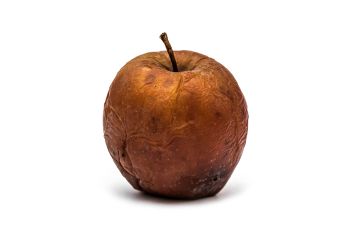
Here’s the big secret: the Garden of Eden wasn’t really about who gets to know good and evil. It was about who gets to define good and evil. The question on the table was, “Who knows best?” Adam and Eve bet on themselves, and in the years since then, it’s become painfully obvious:

Without God, we have no objective standard. And without an objective standard, we have no definitive way to say, “This is right and this is wrong.” Instead, we have opinions. Best guesses. Shots in the dark.

But to walk with God, we have to be willing to do what Adam and Eve weren’t. We have to be willing to trust that He knows better.

As a human, that can be tough. It can be a little grating to have “because God said so” as our reason for doing something. We tend to want more—an explanation, an insight, a detailed breakdown of cause and effect. Sometimes God gives us those explanations—and sometimes He doesn’t. Sometimes we may not even agree with what God expects of us. And in those moments, it’s not always easy to accept His decision. After all, why should God get to label what’s right and wrong?

And the answer—the obvious answer, the one staring us in the face, the one we don’t always like to admit—is, “Because He’s God.”

Because He is the immortal, eternal, unchanging God, unbound by time and space. Because His character is love, and His standards are never arbitrary but are designed for the benefit of all. Because He has a perfect understanding of everything that has ever happened or could ever happen. Because He knows the infinite complexities of the inner workings of our lives in a way we can’t begin to comprehend.

If good and evil exist in our universe, then God is the One best equipped to understand and explain those concepts, because He created the universe.

And within that universe, we humans seem to come equipped with a sense of right and wrong, fair and unfair, just and unjust. We’re attuned to things like double standards and hypocrisy. But why? How did we end up with all those senses, and how can we fine-tune them to be more accurate?

Calibration required

God created humans with a conscience. It is shaped by our parents and our society. Whether or not we ever come to know Him and His perfect law, that conscience develops some sense of right and wrong. Most of us feel guilty when we lie. Murder is a shocking, unsettling thought. We feel good about helping someone else out.

Something inside us feels strongly about these things, and we tend to label those strong feelings as either “right” or “wrong.”

“There is a way that seems right to a man, but its end is the way of death.”But our conscience is imperfect. The Bible warns, “There is a way that seems right to a man, but its end is the way of death” (Proverbs 14:12) and, “The heart is deceitful above all things, and desperately wicked; who can know it?” (Jeremiah 17:9). Our conscience has to be educated, and it is easily corrupted, deceived and ignored. It’s a mechanism for sorting out right and wrong, but it needs calibrating.

After communicating God’s instructions to the Israelites, Moses explained that “the commandments of the LORD and His statutes” were “for your good” (Deuteronomy 10:13). Nothing about God’s laws is arbitrary—those instructions contain the keys to both knowing and doing good.

The more we learn and follow those laws, the more we calibrate our consciences. When we choose to stop figuratively eating from the tree of the knowledge of good and evil—when we choose to let God show us the difference between good and evil instead of trying to sort it out for ourselves—then we can turn to the pages of the Bible and find the discernment we need.

When we couple that with the Holy Spirit God offers us (2 Timothy 1:6), we begin to develop some insight into the very mind of God Himself. We can start to see not only what things are good and evil, but why those things are good and evil. With God as our guide, we can make the decisions that lead to a happier, more fulfilling life.

Good with God

It’s true—you can do good things without God. Anyone can, and many do.

But doing good things and being good—truly understanding goodness and integrating it into our character—are two different things.

If we follow in the footsteps of Adam and Eve by trying to figure things out on our own, we’re going to get some things right—but we’re also going to get some things wrong. Really wrong. And the worst part is, we won’t always know the difference until it’s too late.

Jesus explained, “No one is good but One, that is, God” (Matthew 19:17). When we live our lives apart from His standards, the best we can do is guess, and guessing isn’t enough. We can’t truly be good without God because God alone is good.

You can do good things without God, but you’ll be forever falling short of your true potential, missing out on the very reason you were created.

The truth is, going through life with God—trusting in His guidance and letting Him show us the way forward—is about so much more than just being good. It’s about being so much better than we could ever be on our own.

To learn more about the values God calls good and how they’ll one day change the world, read our article “Christian Values.”


Is Abortion Wrong?


There are strong opinions both for and against abortion. Is the Bible silent on this subject, or does God’s Word give us the needed answer?

In a landmark U.S. Supreme Court decision, abortion was legalized in 1973. Since then, some 60 million abortions have taken place in the United States alone. Around the world, 40 to 50 million babies are aborted each year—about three abortions every two seconds.

The subject of abortion remains polarizing, with little middle ground. People seem to strongly support it or vehemently oppose it. Those in favor of abortion (pro-choice) base their opinion on two ideas: first, that an embryo is not a human being until it becomes a fetus several months old in the womb (or others would say until the baby can live outside the womb), and second, that a woman should not be forced to carry an embryo to term if she believes it would be bad for her or the baby.

Many of those against abortion (pro-life) say that from the moment of conception an embryo is a person, and therefore abortion is murder.

So, what does God—the Creator of life—say about the subject?

When does life begin?

The Bible plainly states that God is the source of life (John 1:1-41 Timothy 6:13). As the Giver of life, only He has the right to decide when a human life should end.

Still, the question is, when does life begin? Does the Bible give us indicators of life? Yes:

“And the LORD God formed man of the dust of the ground, and breathed into his nostrils the breath of life; and man became a living being” (Genesis 2:7).

“For the life of the flesh is in the blood” (Leviticus 17:11).

Both oxygen (the “breath of life”) and blood are required for life. And soon after conception these two things can clearly be identified.

Within just a few days after conception, the fertilized egg attaches itself to the mother’s uterine wall and begins receiving oxygen through the mother’s blood. Within a month, there is a circulatory system (containing oxygenated blood); and within six weeks, a distinct heartbeat can be heard.

By the time a woman realizes she is pregnant, the circulatory system has already developed, and a distinct life has begun.

How does God view unborn babies?

The Bible also shows that God sees the unborn as distinct individuals equal to those who have already been born.

God told Jeremiah, “Before I formed you in the womb I knew you; before you were born I sanctified you” (Jeremiah 1:5, emphasis added throughout).

King David also understood that God recognizes and knows individuals when they are yet in the womb (Psalm 139:13-16).

God also told the mothers of Samson and John the Baptist that He had special plans for the children that they would soon conceive (Judges 13:3-7, 24Luke 1:13-15). Samson’s mother was told by God to abstain from certain foods during her entire pregnancy, because of the special purpose He had for her son.

And when Elizabeth (the mother of John) was six months pregnant, an incredible thing happened. When her relative Mary (the mother of Jesus) came to visit:

“And it happened, when Elizabeth heard the greeting of Mary, that the babe leaped in her womb. … ‘For indeed, as soon as the voice of your greeting sounded in my ears, the babe leaped in my womb for joy’” (Luke 1:41, 44).

Note that the original Greek word used for “babe” (brephos) is the same word used to identify Jesus Christ as a “babe” lying in a manger (Luke 2:16). So God refers to both an unborn child and an infant child using the same word—babe.

Another striking example is the unborn children of Rebekah. Unsure about the unusual movement in her womb, Rebekah looked to God for the answer. And His answer to her was that there weren’t just twins inside of her, but two different nations (Genesis 25:22-24).

God had decided that the two boys inside her were to be the fathers of millions of descendants.

What’s important about these examples is that God didn’t say these things after the babies were born, but before.

The simple truth is that we do not have the right to define when human life begins or ends. That right belongs solely to God. And God says that even before we are aware of a pregnancy, that very tiny embryo is alive. An unborn child is to be treated as a person.

To whom do the unborn belong?

It may come as a surprise to many, but the Bible tells us that even we don’t belong to ourselves; we belong to God (Romans 14:7-8). That means the children conceived by us belong to God as well.

When the male sperm unites with the female egg, that union is smaller than the head of a pin. And in just nine months that union grows into a fully developed baby.

King David declared, “You [God] formed my inward parts; You covered me in my mother’s womb. I will praise You, for I am fearfully and wonderfully made” (Psalm 139:13-14). Yes, the Creator of life is “the LORD who made you and formed you from the womb” (Isaiah 44:2).

By God’s design, the union of the sperm and egg creates a unique and distinct person unlike anyone else. Although the traits of the father and mother are passed on to this tiny embryo, it is neither the father nor the mother that causes this tiny life to grow; it is God (Job 31:15). The process of a tiny speck becoming a living being is the miraculous work of God (Ecclesiastes 11:5).

Therefore, the unborn child ultimately belongs to God. And the mother does not have the right to abort an unborn child, regardless of what the Supreme Court has ruled.

Again, the Bible leaves no doubt that children belong to God. The ancient Israelites once sacrificed their babies and small children to pagan gods. Notice what God said about this deplorable practice:

“Moreover you took your sons and your daughters, whom you bore to Me, and … you have slain My children” (Ezekiel 16:20-21).

We may call them our children, but in reality, they are God’s children.We may call them our children, but in reality, they are God’s children. He graciously allows us stewardship of them (Psalm 127:3). God became angry at our ancestors who murdered His children. And God is angry today when we murder His children by abortion.

What about birth defects?

In the ongoing debate about abortion, some suggest that there may be occasional or unusual times when abortion is acceptable or even preferable. Perhaps the most obvious of these are babies in the womb with birth defects.

Many claim that it is unfair to the child to allow him or her to be born with potential lifelong problems. Yet the Bible clearly states that those with birth defects are not “rejects,” unworthy of life. In John 9:1-3 the example is given of a person born blind. In that example Jesus Christ says that God had a special purpose for that individual—that his life was very important to God. From our limited human perspective, we are simply unable to know what God may have in mind for that child and his or her family. Therefore we should not take it upon ourselves to decide whether the child should live or die.

Abortion as birth control?

Now that it is becoming more convenient to cause the body to abort a fertilized egg with over-the-counter drugs, is abortion just another form of birth control?

God is not against family planning, as long as it is safe and prevents the sperm from uniting with the egg in the first place. But any birth control method that comes after conception and destroys a fertilized egg is wrong because it is taking a human life. (For a biblical study on this subject, see our article “Is Birth Control Wrong?”)

No matter how careful a man and woman are, unexpected pregnancies can and will happen. This is part of the reason God says it is wrong to have sex outside of marriage. God wants children to be cared for in a loving, committed relationship. (See our articles “Why Sex Is Never Casual” and “Living Together Before Marriage.”)

The sanctity of life

Even considering the idea of abortion should take on a new meaning when we consider the incredible purpose of human life.

The creation account records that God made the animals “after their kind” (Genesis 1:21, 24-25, King James Version). But mankind is different.

“Then God said, ‘Let Us make man in Our image, according to Our likeness’” (verse 26). Mankind is made after the God kind!

The Bible reveals that God is creating children through mankind! God’s intention is to bring “many sons [and daughters] to glory” (Hebrews 2:10).

God is very concerned with every life, not wanting anyone to perish—to miss being in His eternal family (2 Peter 3:9).

Even the analogy of becoming a child of God is likened to a pregnancy. We are begotten of the Father before we are born into His family (1 Peter 1:3). Even in this begotten state, when we aren’t yet composed of spirit, God calls us His spiritual children (1 John 3:2). God will not abort His begotten children, and neither should we abort our begotten children.

We started this article with the question about abortion, “Does God’s Word give us the needed answer?” Yes, it does. The Scriptures show us that abortion is a sin, breaking the Sixth Commandment, “You shall not murder.”

What if you already had an abortion?

The unfortunate reality is that a large number of women who have had an abortion come to regret it. Even “Jane Roe” (which was not her real name) regretted being part of the famous Roe v. Wade court case because she later changed her mind and took a position against abortion.

What if you are one of those women or one of the fathers who participated in deciding on an abortion? What can you do now? Is there hope for you and the life that you ended prematurely?

The answer to both questions is yes!

God sent His Son, Jesus Christ, to die for all of mankind’s sins so there could be a future for all of mankind, because all have sinned (Romans 3:23). And when one genuinely repents of his or her sins, God is willing to forgive those sins (1 John 1:9).

Upon repentance, we no longer have to have that guilt hanging over our head. With God’s forgiveness, we can move forward, no longer held captive by past mistakes. There is hope in your future.

But what about the unborn child that was aborted?

As we showed earlier, God recognizes the unborn as distinct individuals. And since everyone who has ever lived will have a chance for salvation, doesn’t it make sense that God will give unborn babies a chance for salvation as well?

The Bible is a book about life. God wants to give all people the opportunity to live forever in His eternal family. “For I know the thoughts that I think toward you, says the LORD, thoughts of peace and not of evil, to give you a future and a hope” (Jeremiah 29:11).


Three Ways Pride May Be Infecting Us All


The Bible specifically warns us to avoid pride and arrogance. How do we recognize and purge this dangerous and infectious sin from our lives?

The late New Testament scholar John Stott said, “At every stage of our Christian development and in every sphere of our Christian discipleship, pride is the greatest enemy and humility our greatest friend.”

He also said, “Pride is more than the first of the seven deadly sins; it is itself the essence of all sin.”

God reveals that He considers a proud look and a proud heart to be an abomination (Proverbs 6:16-1716:5). God also inspired Solomon to write, “Pride and arrogance and the evil way and the perverse mouth I hate” (Proverbs 8:13).

So, why does God hate pride so much?

The Bible defines pride as arrogance, haughtiness and conceit. Pride emphasizes the self over others, and it rejects God’s greatness.

Pride occurs when sinful human beings subconsciously aspire to the status and position of God and refuse to acknowledge their dependence upon Him. Pride contends for supremacy with Him.

Pride takes innumerable forms but has only one end: self-glorification. That’s the motive and ultimate purpose of pride—to rob God of legitimate glory and to pursue self-glorification, contending for supremacy with Him. The proud person considers himself better than other people, and even seeks to glorify himself instead of God, thereby attempting in effect to deprive God of something only He is worthy to receive.

A proud person has a distorted view of himself, not accepting Paul’s words in 1 Corinthians 1:26, 29: “For you see your calling, brethren, that not many wise according to the flesh, not many mighty, not many noble, are called. … that no flesh should glory in His presence.”

Putting ourselves in the place of God is truly prideful, but pride also includes deciding that we know better than everyone else when we should be esteeming others better than ourselves (Philippians 2:3). Even comparing ourselves too favorably over others would be prideful and certainly is not wise to do (2 Corinthians 10:12).

Ungodly and hateful pride is a growing reality in the modern world. Instead of emphasizing personal responsibility and gratitude, this world emphasizes self-worth and self-centeredness. From the time when Lucifer developed pride because of his beauty (Ezekiel 28:17) to today, when modern political candidates and celebrities flaunt their greatness, the entire span of history shows us how infectious and dangerous pride can be.

Pride can also affect us in subtle ways. It is always lurking in the background of our lives, and we might not even be aware of it.It’s no wonder God listed pride as something He hates and inspired multiple scriptures to be written showing why all humanity should overcome it. We are even told, “God resists the proud” (James 4:6). This alone should be a warning that pride has to go.

But pride can also affect us in subtle ways. It is always lurking in the background of our lives, and we might not even be aware of it.

Three ways pride may be infecting us

1. Social media.

Facebook and other social media can be amazing tools for staying connected with friends and family. However, social media can also be a breeding ground for personal pride. Here is one way pride can reveal its ugly face on social media outlets:

Constantly checking to see how many people liked or commented on something we posted, or how many “hits” we receive, and feeling upset if “not enough” people responded.

Challenge: Review past posts and comments and see how much attention we tried to pull toward ourselves. Also, we could go through our personal photo albums and see if we have an excessive number of “selfies” posted.

2. Conversations with friends.

There’s nothing like getting together with friends and having great conversations. But what happens when pride creeps into our conversations? It is easy to spot in others, but much harder to see in ourselves. Notice these examples:

One-uppers: Trying to beat the stories or experiences other people are relating (“My day was worse” or “I had a bigger problem”). This is an attempt to bring the focus back on us, no matter what other people are saying.

Conversation dominators: When one person dominates a conversation to the extent that the other person cannot get a word in edgewise. Conversation should be give-and-take, not just give.

Know-it-alls: Never admitting wrong and always pointing out wrong in others. Unfortunately, too often this goes beyond just conversation and turns into a full lifestyle of pride. It is very important to have the ability to admit when we are wrong.

Challenge: Ask a friend or family member—someone close enough to us to be honest despite hurting our feelings—to answer this question gently but truthfully: “Do you sometimes think I’m being arrogant or boastful in what I say?” If we are not comfortable doing this, we can still try to evaluate our own conversations.

3. Our spirituality.

Jesus Christ warned against pride in our own spirituality (Matthew 6:1, 5). Though Christ wants us to practice righteous living, He doesn’t want us to live righteously just to attract attention to ourselves or appear righteous to others. Constantly calling attention to our personal righteousness is an easy way to fall into pride (the epitome of unrighteousness).

Throughout the Gospels, Jesus constantly corrected the Pharisees for practicing religion just to be seen by others.

The most famous example is in Luke 18:9-11: “Also He spoke this parable to some who trusted in themselves that they were righteous, and despised others: ‘Two men went up to the temple to pray, one a Pharisee and the other a tax collector. The Pharisee stood and prayed thus with himself, “God, I thank You that I am not like other men—extortioners, unjust, adulterers, or even as this tax collector.”’” (For more details, read our article “The Pharisee and the Tax Collector.”)

Challenge: As we post things online or speak to others, we need to keep this instruction in mind: “Let another man praise you, and not your own mouth; a stranger, and not your own lips” (Proverbs 27:2).

A hard road

Pride is not an easy sin to overcome, mainly because it is so easy to see in others, yet so painfully difficult to see in ourselves. Benjamin Franklin once stated: “There are three things extremely hard: steel, a diamond, and to know one’s self.”

Seeing the danger that pride brings—destruction (Proverbs 16:18)—should make us that much more eager to fight against this sin at every turn.

One of the best ways to deal with pride is to replace it with an attitude God constantly emphasizes in the Scriptures—humility. “Yes, all of you be submissive to one another, and be clothed with humility, for ‘God resists the proud, but gives grace to the humble’” (1 Peter 5:5).

Another antidote to pride is to remember to give thanks to God (Colossians 3:15-17). Being thankful to Him helps us to realize that everything we have—including our lives and our blessings—comes from God, and He deserves all the credit and glory.

So, let’s crush insidious pride in all of its forms and replace it with humility and thanksgiving!

To learn more about overcoming pride, read the blog post “Overcoming Pride.”


A Believers Body As A Temple

  1 Corinthians 3:16-17 Do you not know that you are a temple of God and that the Spirit of God dwells in you? If any man destroys the templ...