Tuesday, August 5, 2025

Pay It Forward


Popular catchphrases can be shallow and trite. But the concept of “paying it forward” actually has an amazing history and a powerful potential to do good.

Pay it forward is a very old and intriguing idea. Benjamin Franklin believed and practiced it. Ralph Waldo Emerson wrote of it. Science-fiction masters Robert Heinlein and Ray Bradbury illustrated it in their work. 

Some believe pay it forward actually dates from the Greek playwright Menander in the 300s B.C. In reality the concept is much more ancient that that; it’s existed since the beginning of time.

More recently it was made popular in a 1999 novel by Catherine Ryan Hyde and a popular film released the next year. Both bore the title that crystalizes the concept: Pay It Forward. This phrase encourages us to do a good deed for people in need and, when thanked, to ask them to repay the good to someone else.

Quotes about pay it forward: Benjamin Franklin and doing “a deal of good”

Benjamin Franklin’s practice is found in a letter to Benjamin Webb in 1784: 

“I send you herewith a Bill for Ten Louis d’ors [French gold coins]. I do not pretend to give such a Sum; I only lend it to you. When you shall return to your Country with a good Character, you cannot fail of getting into some Business, that will in time enable you to pay all your Debts. In that Case, when you meet with another honest Man in similar Distress, you must pay me by lending this Sum to him; enjoining him to discharge the Debt by a like operation, when he shall be able, and shall meet with another opportunity. I hope it may thus go thro’ many hands, before it meets with a Knave that will stop its Progress. 

“This is a trick of mine for doing a deal of good with a little money.”

Encouraging those we help to pay it forward can indeed multiply the good we practice.

Several “pay it forward”–oriented foundations now encourage the practice in various ways. One sells plastic bracelets with the motto inscribed as a wearable reminder to look for opportunities to do good for others. The bracelets are intended to be passed on to a beneficiary as a reminder to keep the chain of good deeds unbroken.

The origin of the idea behind pay it forward

This idea, whether in its modern adaptations or its ancient applications, actually has an older and more important source than any human history: God created it, and He has practiced it since “the beginning.”

We see this in James 1:16-17: “Do not be deceived, my beloved brethren. Every good gift and every perfect gift is from above, and comes down from the Father of lights, with whom there is no variation or shadow of turning.”

Everything good we experience in life is a gift from God, where good starts. He doesn’t owe anyone anything; He has no debts to repay. He doesn’t practice “random acts” of kindness; His blessings are all significant and serve the transcendent purpose of human life. 

Whatever good we are capable of doing is only possible because God gave us the means, starting with the breath of life: “In Him we live and move and have our being” (Acts 17:28).

Pay it forward and the Golden Rule

The Bible enjoins upon Christians the necessity of passing on to others the good God has done to them. Jesus’ simple statement is now often known as the Golden Rule: “Therefore, whatever you want men to do to you, do also to them, for this is the Law and the Prophets” (Matthew 7:12). 

Doing good in this way sums up God’s relationship principles in the Bible.

We should strive to do good deeds wherever we can. No one should be excluded, though fellow Christians deserve extra attention. “And let us not grow weary while doing good, for in due season we shall reap if we do not lose heart. Therefore, as we have opportunity, let us do good to all, especially to those who are of the household of faith” (Galatians 6:9-10).

The Bible, then, encourages us to reflect on the good God has done in our lives and to pass it on to others. 

What good does the Bible say we should pay forward?

1. Love 

“We love Him because He first loved us. If someone says, ‘I love God,’ and hates his brother, he is a liar; for he who does not love his brother whom he has seen, how can he love God whom he has not seen? And this commandment we have from Him: that he who loves God must love his brother also” (1 John 4:19-21).

When we realize how much God loves us, and how many good things He is doing for us now and will do for us in the future, we love Him in return. And when that happens, we have a responsibility to love our fellow human beings. That divine, selfless, altruistic love that we receive from our Father in heaven must be paid forward to His other children.

One of the concepts in the novel Pay It Forward is that good deeds are more powerful if done for people we don’t know or wouldn’t naturally want to help. This, too, is a reflection of God’s character and His will for us. When God begins to work with us, doing good to us, we’re not good. 

When we realize how much God loves us, and how many good things He is doing for us now and will do for us in the future, we love Him in return. And when that happens, we have a responsibility to love our fellow human beings.

“But God demonstrates His own love toward us, in that while we were still sinners, Christ died for us. Much more then, having now been justified by His blood, we shall be saved from wrath through Him. For if when we were enemies we were reconciled to God through the death of His Son, much more, having been reconciled, we shall be saved by His life. And not only that, but we also rejoice in God through our Lord Jesus Christ, through whom we have now received the reconciliation” (Romans 5:8-11). 

God shows mercy to us when we are still “enemies,” living in violation of His will. Jesus was willing to die for people who were opposing Him. 

We must pay forward this kind of love. Jesus stated, “I say to you, love your enemies, bless those who curse you, do good to those who hate you, and pray for those who spitefully use you and persecute you, that you may be sons of your Father in heaven; for He makes His sun rise on the evil and on the good, and sends rain on the just and on the unjust” (Matthew 5:44-45).

2. Reconciliation

“Now all things are of God, who has reconciled us to Himself through Jesus Christ, and has given us the ministry of reconciliation, that is, that God was in Christ reconciling the world to Himself, not imputing their trespasses to them, and has committed to us the word of reconciliation. Now then, we are ambassadors for Christ, as though God were pleading through us: we implore you on Christ’s behalf, be reconciled to God” (2 Corinthians 5:18-20). 

Through Christ’s sacrifice, God reconciled us to Him. That is, He healed and restored our relationship, which had been broken by our sins. Now we are told we have a ministry (service) of reconciliation, to do what we can to help people be reconciled with God and with each other. Working collectively to proclaim the way to reconciliation with God is part of the mission of the Church. We should also individually seek ways to help restore fractured friendships and heal wounded family relationships.

3. Hope

“But sanctify the Lord God in your hearts, and always be ready to give a defense to everyone who asks you a reason for the hope that is in you, with meekness and fear” (1 Peter 3:15).

The world is growing increasingly dark and forbidding. Fears of wars and terrorism, crime, disease epidemics, religious persecution, economic crises and other ills are causing many people to doubt there can be a bright future. Some live in despair. 

Christians live in the hope of God’s promises that, though the planet will traverse a very dark time, the world will finally see the ultimate happy ending. And those who walk with God can be assured of His care and protection even in the most difficult circumstances (Hebrews 13:5-6). 

We need to be prepared to share that hope with others who ask about our faith and confidence. This will become more important as the days further darken. We should be prepared to pay forward the hope that God has given us.

4. The gospel of the Kingdom

Jesus chose 12 disciples and sent them out on a mission. He said, “And as you go, preach, saying, ‘The kingdom of heaven is at hand.’ Heal the sick, cleanse the lepers, raise the dead, cast out demons. Freely you have received, freely give” (Matthew 10:7-8). 

He told the disciples that they had been taught the truth of God without charge, and they were to pay that forward to others without cost. This is the reason Discern has no subscription cost. We who produce this magazine learned the truth of the gospel of the Kingdom of God for free, made possible by the contributions of those who supported the work of God in the past. We now pay this forward to you without obligation. 

We hope that if you feel thankful for learning these biblical truths, you will become involved in continuing this work and help make it possible to pay it forward to others.

While we are told to be ready to share this hope with those who ask us individually, sharing the gospel is mostly a collective effort. If you would like to know how you can help pay forward this vital gift of truth, please see the How Can I Help? link at the bottom of the Life, Hope & Truth website.

Do your part in paying it forward

Passing on good deeds may seem like a modern idea, but it is as old as the work God is doing with humanity. He has given us life and everything else we need to achieve our potential—eternal life in the family of God. Let’s take the good things God has done for us and do our part to pay them forward.


How to Put on the Armor of God


In our war with Satan, his society and our human weaknesses, we need spiritual help. God provides the powerful armor of God to protect us—and give us victory!

What is the armor of God? 

Ephesians 6:14-17 lists six pieces of the armor of God:

  1. Belt of truth.
  2. Breastplate of righteousness.
  3. Shoes of the gospel of peace.
  4. Shield of faith.
  5. Helmet of salvation.
  6. Sword of the Spirit.

God provides these six aspects of the Christian life, plus prayer (verse 18), to strengthen and protect us and ultimately help us to triumph in our spiritual battles. Each piece of the armor of God is essential, and the Bible tells us how to put them on and use them effectively.

How to use the armor of God to defend against the attacks of Satan

The Bible tells us we are in a war, and our adversary, Satan the devil, is bent on destroying us. The apostle Paul warns us to beware of Satan’s devices and tactics (2 Corinthians 2:11).

Paul addressed this in Ephesians 6:10-20 where he talks about putting on the whole armor of God. Ephesians was one of Paul’s letters written from prison. During Paul’s time in prison he obviously became well acquainted with the armor worn and carried by his captors in the Roman army. Following Isaiah’s lead (Isaiah 59:17), Paul drew a powerful comparison between a soldier’s armor and the spiritual armor of God.

Paul wrote: “Finally, my brethren, be strong in the Lord and in the power of His might” (verse 10).

You see, we don’t have to be discouraged by Satan’s devices or by his power and stealth. We aren’t in this battle alone. We have access to the greatest power in the universe!

Verse 11 continues: “Put on the whole armor of God, that you may be able to stand against the wiles of the devil.”

This is a comprehensive defense strategy, and we have to pay attention to all parts of this armor God offers. But if we do, we will be able to withstand Satan’s attacks.

Fighting spiritual battles today

“For we do not wrestle against flesh and blood, but against principalities, against powers, against the rulers of the darkness of this age, against spiritual hosts of wickedness in the heavenly places” (verse 12).

The Bible describes unseen spiritual battles, such as the titanic battle at the end of the age that the apostle John witnessed: “And war broke out in heaven: Michael and his angels fought with the dragon; and the dragon and his angels fought, but they did not prevail, nor was any place found for them in heaven any longer. So the great dragon was cast out, that serpent of old, called the Devil and Satan, who deceives the whole world” (Revelation 12:7-9).

All this is happening behind the scenes in the spiritual world, but it has great influence over the physical world. Satan and the demons are invisible, and he is a master of camouflage. He is able to convince people that he doesn’t exist, and he is able to sway society and suggest wrong thoughts to us without our even realizing he is there.

Paul continued in Ephesians 6:13: “Therefore take up the whole armor of God, that you may be able to withstand in the evil day, and having done all, to stand.”

What does he mean, “to stand”? He was emphasizing that with God’s help, we will be able to hold the line, to not retreat, to not give up an inch of God’s territory.

Now Paul starts to list the individual elements of this spiritual armor. The Bible also tells us how to put on the armor of God. Here is how you can use each piece of armor to fight against the powers of Satan.

1. What is the belt of truth?


Belt of Truth

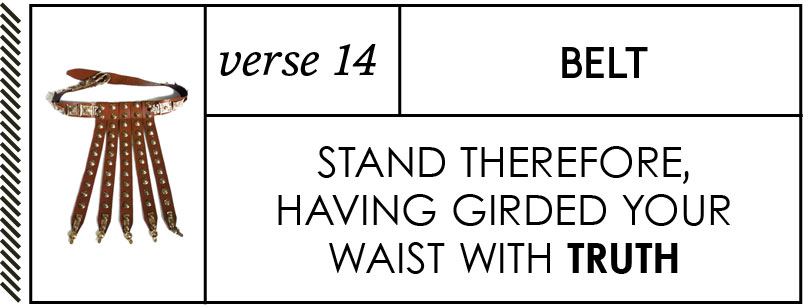
A belt was the first piece of equipment put on, and it secures all the other pieces of our armor. Wearing the belt showed that the soldier was ready for action, since he would only loosen his belt when he went off duty.

Truth should surround us like a belt. Knowing God’s truth is the surefire antidote to Satan’s lies and deception. And to be truly ready for the battle, we must be completely truthful ourselves in our inner being, like our Creator.

As Jesus said, “Your word is truth” (John 17:17). Paul exhorted us to speak the truth in love (Ephesians 4:15). In these perilous end times, a Christian soldier must love the truth for protection against the lawless one and Satan (2 Thessalonians 2:9-10; see “The Love of the Truth”).

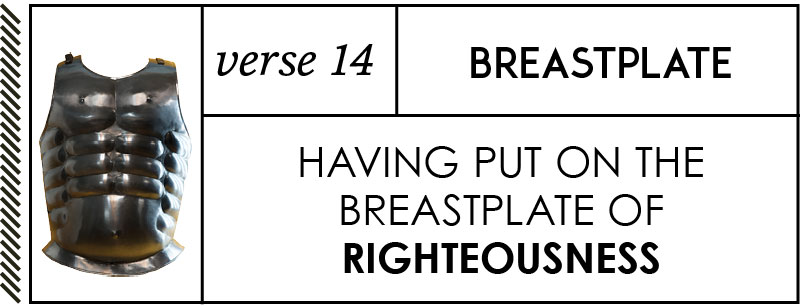
2. What is the breastplate of righteousness?


Breastplate of Righteousness

Next, Paul tells us to “put on the breastplate of righteousness.”

Without righteousness, we leave ourselves open to Satan’s attacks. To be righteous is first of all to repent and be forgiven of our sins through the sacrifice of Jesus Christ that justifies us and makes us right with God (Romans 5:9). Then in gratitude we should strive to do what is right in God’s eyes.

Psalm 119:172 tells us that God’s commandments are righteousness. So to be righteous is to obey God’s laws of love. Obeying God is beneficial, not burdensome (Deuteronomy 10:13; 1 John 5:3).

Isaiah 59:17 says that God Himself puts on righteousness as a breastplate! This may be part of what inspired Paul to use this analogy.

Isaiah 59 starts by explaining that “your iniquities have separated you from your God” (verse 2). Iniquity is the opposite of righteousness, so when we give in to sin without repenting, we are removing our breastplate and leaving ourselves open to more of Satan’s attacks.

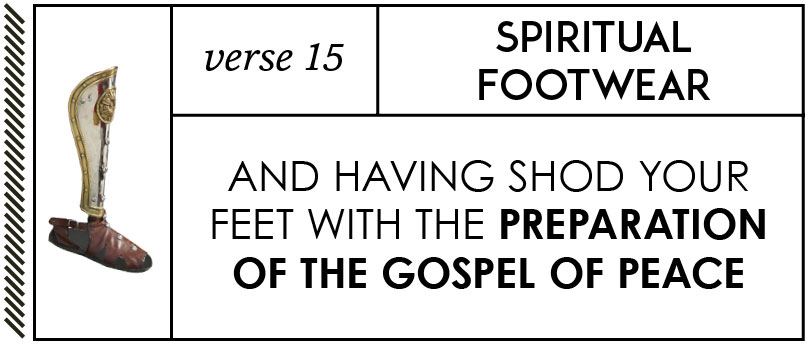
3. What are the shoes of the gospel of peace?


Gospel of Peace

Shoes might not be the most exciting piece of armor, but the Zondervan NIV Bible Commentary highlights their importance:

“The military successes both of Alexander the Great and of Julius Caesar were due in large measure to their armies being well shod and thus able to undertake long marches at incredible speed over rough terrain.”

The word “preparation,” denoting readiness, reminds us that we are to be eager to preach the gospel of peace. The Church of God is sent to announce the good news of God’s Kingdom, which will spread His way of peace around the whole world. Having our spiritual shoes on, we will be ready to spread the news to others.

Albert Barnes’ Notes on the Bible tells us that the sandals of the Roman soldier “often were fitted with nails, or armed with spikes, to make the hold firm in the ground.” God’s good news and our mission—our marching orders—to preach it serve as our firm foundation.

Read more in our articles “What Is the Gospel of the Kingdom?” and “What Is the Mission of the Church?”

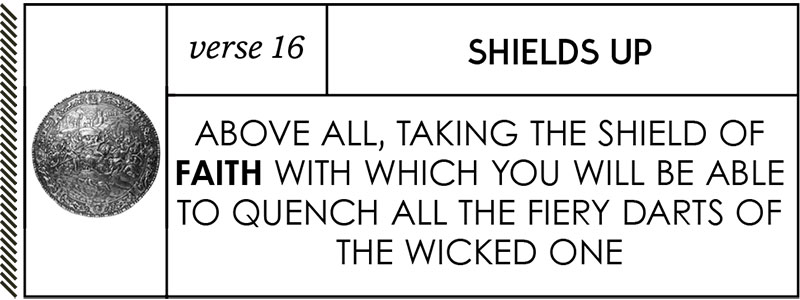
4. What is the shield of faith?


Shield of Faith

When our faith in God’s power and love is strong, it is impossible for Satan to break through our shield and land a blow. Faith means more than just believing that God exists, of course. It includes a firm belief that everything God does is truly for our good. Also, faith is the absolute conviction that God will always do what He has promised (Romans 4:18-21).

Faith protects us in many ways. Think about Daniel in the lions’ den. Faith was like a force field to protect Daniel from those vicious teeth!

And Shadrach, Meshach and Abed-Nego were protected from the fiery furnace! Of course, their faith in God and His eternal plan allowed them to say that they would obey God, even if He didn’t protect them physically then (Daniel 3:18). Faith is powerful and protects us not only from physical dangers, but from the even more challenging spiritual temptations and dangers.

The shield of faith is not just for personal protection. The Roman soldiers had a strategy of joining their shields together. If we join our shields—that is, strengthen each other with our faith, building up and serving as we are able—we will be able to take on any challenge.

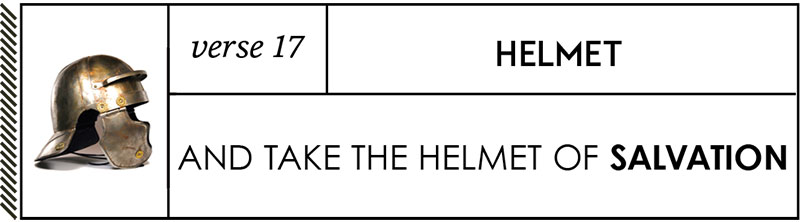
5. What is the helmet of salvation?


Helmet of Salvation

We can receive tremendous hope and comfort by focusing on the incredible sacrifice Jesus Christ gave to save us and the wonderful Kingdom that is the goal of our salvation. This hope protects our minds from the discouragement and despair in this world.

The hope of salvation has protected and strengthened God’s people through the ages.

As Hannah prayed, “My heart rejoices in the LORD; my horn is exalted in the LORD. I smile at my enemies, because I rejoice in Your salvation” (1 Samuel 2:1).

And as David wrote, “The LORD is my light and my salvation; whom shall I fear? The LORD is the strength of my life; of whom shall I be afraid?” (Psalm 27:1).

6. What is the sword of the Spirit?


Sword of the Spirit

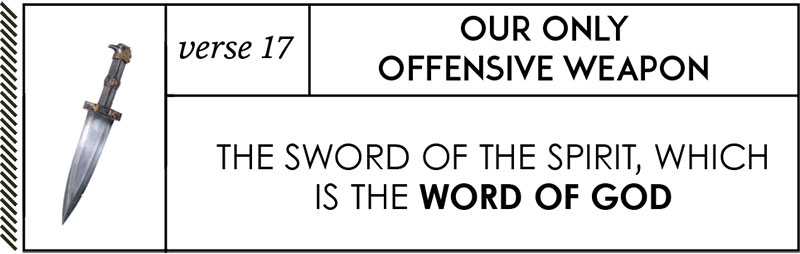
The sword of the Spirit, like the Roman gladius, can also help us to conquer all our enemies, including that most difficult one, our entrenched human weaknesses. Hebrews 4:12 explains: “For the word of God is living and powerful, and sharper than any two-edged sword, piercing even to the division of soul and spirit, and of joints and marrow, and is a discerner of the thoughts and intents of the heart.”

Remember how Jesus used the Word of God to defeat Satan (Matthew 4:1-10)? Christ used scripture quotes three times. He brought to mind the scriptures that dealt with the situation, that showed what He should do and that strengthened His resolve. And so should we.

Our sword won’t stay sharp on its own. We must continually sharpen it with regular and focused Bible study. By studying the Word of God daily, we can have God’s wisdom in the forefront of our minds, ready to help us make wise choices and fight off Satan’s attacks.

Praying always with all prayer and supplication


Prayer and Supplication

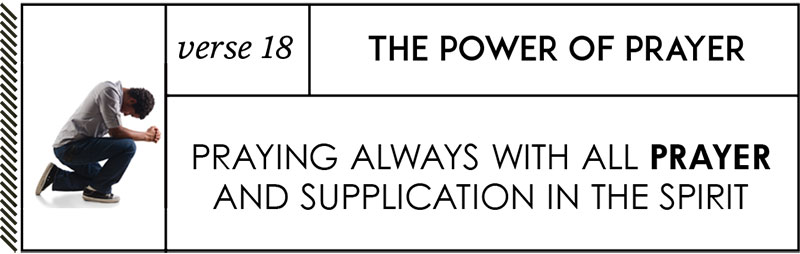
Paul ends this section encouraging us to pray fervently for ourselves, for each other and for the work of the Church.

“Praying always with all prayer and supplication in the Spirit, being watchful to this end with all perseverance and supplication for all the saints—and for me, that utterance may be given to me, that I may open my mouth boldly to make known the mystery of the gospel, for which I am an ambassador in chains; that in it I may speak boldly, as I ought to speak” (Ephesians 6:18-20).

The Church, and each of us individually, moves forward on our knees. Praying reminds us of the battle, reminds us of the source of our strength and defense, and reminds God that we are fully committed to following Him as obedient and faithful soldiers. Prayer and Bible study are the most powerful tools for combating Satan’s weapons.

When we put on this whole armor of God, we will be prepared for Satan’s attempts to attack us with pride, envy, lust for forbidden pleasures, itching ears, disappointment, discouragement, doubt or division—or any other tricks he may use.

There is so much more we can learn from this powerful list of defenses God makes available to us. Hopefully, this article has whetted your appetite to study this important subject in more detail. Make it a goal to study the armor of God in greater depth in the related articles below.

Remember, we’re at war. Let’s be alert to Satan’s devices, and let’s put on the whole armor of God!


Don’t Be Ignorant of Satan’s Devices


We are at war! Satan hates us and wants to destroy us. We must be aware of the devil’s devices, weapons and tactics, because our spiritual life depends on it.

The apostle Paul was well aware of the dangers Satan poses for Christians. We must follow Paul’s example and not be ignorant of Satan’s devices (2 Corinthians 2:11). The New International Version and others translate this as Satan’s “schemes.” This means we must understand the devil’s tricks and traps and examine how he uses his key weapons in individually targeted ways to attack each of us.

So, what are some of the devil’s devious devices and sinister schemes? What are the tools of Satan in his mission to lure us into sin and away from God? This article lists some of Satan’s deadliest devices.

Tool of Satan: Pride

One of Satan’s strongest weapons is pride. Pride is always a danger, especially when things are going well, such as in times of peace and prosperity (Deuteronomy 8:11-17).

Perhaps the best example would be Lucifer himself, the one who became Satan. From the time of his creation, he had always lived under God’s perfect rule. Yet eventually his heart was lifted up with pride, and he rebelled (Isaiah 14:12-15Ezekiel 28:14-171 Timothy 3:6). He uses that same device on us now.

Pride is the opposite of the godly love the apostle Paul described in 1 Corinthians 13:4-8. Pride does “parade itself” and is “puffed up.” When we think more highly of ourselves than others, it is easy to become impatient, unkind, rude and self-seeking.

When we give in to our natural selfish motivations, we naturally treat others and their needs as less important. Anything that doesn’t go our way leads us to believe we are being treated unfairly. Ultimately this leads to narcissistic thinking and behavior.

We can even fall into the trap of being proud of doing good things, as demonstrated by the Pharisee in Jesus Christ’s parable of the Pharisee and the publican. He gave the parable as a warning to those “who trusted in themselves that they were righteous, and despised others” (Luke 18:9).

The self-righteous Pharisee prayed “thus with himself, ‘God, I thank You that I am not like other men—extortioners, unjust, adulterers, or even as this tax collector. I fast twice a week; I give tithes of all I possess’” (verses 11-12). Jesus emphasized that “everyone who exalts himself will be humbled” and extolled the humble, repentant tax collector (verses 13-14). (Read more about this important example in the article “The Pharisee and the Tax Collector.”)

Paul warns that in these perilous “last days … men will be lovers of themselves, lovers of money, boasters, proud, blasphemers, disobedient to parents, unthankful, unholy” (2 Timothy 3:1-2).

Tool of Satan: Envy

Another powerful device of Satan is envy—specifically, the kind of envy that is a distorted, selfish sense of fairness. This goes all the way back to Cain’s envy of Abel, when Abel was blessed for his offering. Cain thought it wasn’t fair. God knew the attitude of both Cain and Abel, so in His eyes it was totally fair.

We know that, because of Satan’s influence, people don’t like to be told what to do. The “forbidden pleasures” grab people’s attention and focus. Satan makes them seem somehow more enticing and pleasurable than the true pleasures God wants us to have.So what does envy produce? “For where envy and self-seeking exist, confusion and every evil thing are there” (James 3:16).

Tool of Satan: Anger

Paul warned about the dangers of anger. “‘Be angry, and do not sin’: do not let the sun go down on your wrath, nor give place to the devil” (Ephesians 4:26-27). The New International Version says, “Do not give the devil a foothold.”

When we allow anger to have the upper hand, we don’t think clearly and we often act rashly. Don’t give Satan that foothold to making further inroads in your life. See “A Foothold for the Devil” for helpful advice for avoiding this device of the devil.

Tool of Satan: Lust for forbidden pleasures

Another tool that Satan uses is the lust for forbidden pleasures.

We know that, because of Satan’s influence, people don’t like to be told what to do. The “forbidden pleasures” grab people’s attention and focus. Satan makes them seem somehow more enticing and pleasurable than the true pleasures God wants us to have. See more about this in the articles “Temptation” and “Desire.”

Tool of Satan: Itching ears

Paul warned about another device of Satan: Itching ears. “For the time will come when they will not endure sound doctrine, but according to their own desires, because they have itching ears, they will heap up for themselves teachers; and they will turn their ears away from the truth, and be turned aside to fables” (2 Timothy 4:3-4).

Paul was warning Timothy of a natural tendency of human beings to want to hear new things, smooth things, things that appeal to us. Satan creates or exploits a quirk of human nature that allows even the amazing truths of God to seem boring! We must not fall prey to this weapon of Satan.

The four Ds: disappointment, discouragement, doubt and division

There are many other devices Satan uses. For example, Satan has been very effective with what have been called the four Ds. The devil’s four Ds are:

  • Disappointment. Any time we look to people as our standard, we can be disappointed. But if we trust and have faith in God, we won’t be put to shame.
  • Discouragement. When we dwell on disappointments, it often leads to discouragement. But God has given us the Holy Bible, His plan and His promises to encourage us.
  • Doubt. Discouragement left unchecked leads to doubt.
  • Division. Doubts and worries can lead to division of our loyalties. These can also lead to divisions between people and distancing from God.

We must be aware of these and the other weapons in Satan’s arsenal. Then we must combat them.

The whole armor of God

The apostle Paul also explained how to defeat our enemy. God provides the ultimate protection from Satan’s devices and schemes and deceitful traps.

Paul said, “Put on the whole armor of God, that you may be able to stand against the wiles of the devil” (Ephesians 6:11).

This spiritual armor includes the belt of truth, the breastplate of righteousness, the shoes of the gospel of peace, the shield of faith, the helmet of salvation and the sword of the Spirit.

We encourage you to study the article “Put on the Armor of God,” which focuses on these defenses our great and loving God gives us. There you will also find links to articles about each of these powerful pieces of armor. Don’t try to face Satan without God’s armor!


A Believers Body As A Temple

  1 Corinthians 3:16-17 Do you not know that you are a temple of God and that the Spirit of God dwells in you? If any man destroys the templ...